

As the United States celebrates its 250th anniversary, opinions about the country’s future turn pessimistic when regarding the milestone according to a recent Elon University Poll. The negativity was especially strong among older generations.
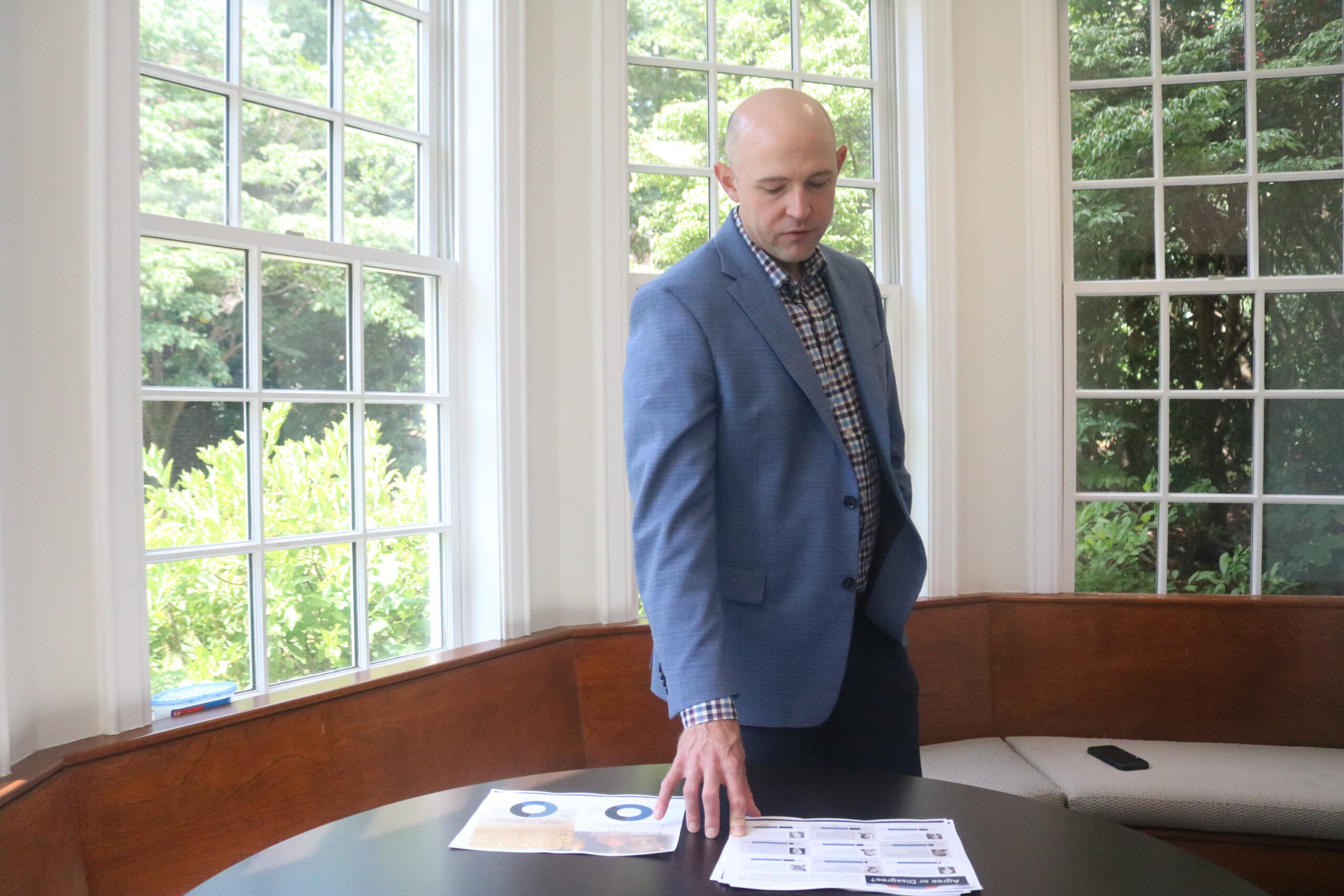
The poll, conducted between April 30 and May 6, 2026 was conceived by poll director and professor Jason Husser who wanted to go beyond the surface-level opinions often found in the news.
“Let’s go deep and let’s go beyond the headlines. Let’s go deeper than what people think about,” he said.
Husser said that the most interesting part to him was the divide in pride between generations. Younger people felt more pessimistic about current events, and optimistic about the future while older generations felt the opposite.
The poll asked nationwide participants 18 and older a series of questions about their pride in America and their optimism for the future. The margin of error was reported at +/-3.95. Generation Z showed lower numbers when asked about pride in their country.
“We generally see lower levels of sort of psychological attachment or affinity to the concept of the United States, among Generation Z,” Husser said.
Although younger people have less attachment toward the country they often have more optimism about the future. Participants under the age of 30 had the highest confidence in U. S. government decisions over the next 50 years, with 54% saying they are somewhat or very confident.
People 46-61 years old have the lowest confidence rate in the future decisions of America with 71% expressing little to no confidence. People older than 62 had the highest rate of believing the United States is unsuccessfully living up to the country’s founding ideals.
Husser said the difference in country pride versus hope can be explained by the cultural events experienced in their lifetime.
“For instance, with millennials, people who are often saying they’re doing these different types of financial habits, we can connect that to the great recession,” Husser said.
Members of Gen Z indicated that they are confident and optimistic about the future of the country but are not happy with the current state of the United States.
A similar poll by Pew Research Center conducted between April 6 to April 12 2026 found less optimism among young people than the Elon University Poll.
“Young people are less likely than older people to say they think the government will work better, that the economy will be stronger, things like that,” said Senior Associate Director Gregory Smith.
Husser said according to the Elon University Poll, younger people showed lower levels of support for the notion that America is the greatest country.
According to Husser, older generations are not optimistic, but they are satisfied with the current state of the country.
“We see some baby boomers, for instance, who are very attached to the concept of the United States, but also pretty pessimistic over the next 50 years,” Husser said.
The divide within generations is not a coincidence. Smith said age gaps have “different time horizons for thinking about the future.” More commonly, younger people have higher expectations for the future.
Overall, Smith found that the overarching mood was unexpected because during a celebratory time, it is routine for people to feel pride and optimism.
Instead, he said “Most people are dissatisfied with the way things are going in the country today. Most people say they think the country’s best days are behind it. So there’s a lot of pessimism. The mood is sour.”
The Elon University Poll found similar results, as Husser said there were “very mixed attitudes to sort of negative attitudes at the moment, related from pride of being an American or feeling happy about America 250.”
Husser said he hopes this survey encourages open conversations and decreases information asymmetry between people.

Aly McFadden
Alesandra McFadden is a rising senior at Arthur L. Johnson High School in Clark, New Jersey. A passionate writer and creator, Aly serves as editor-in-chief of her school’s newspaper, overseeing all articles published in local papers. Additionally, she is the sole editor for the New Jersey Key Club, where she manages all editorial and publication efforts at the state level. Aly has a strong passion for service, having completed over 300 service hours throughout her high school career. Her commitment to service extends beyond school, as well. She served as Miss American Irish with the Woodbridge American Irish Association, where she demonstrated leadership and inspired members of her community. Aly is also an avid runner and a three-year varsity athlete on her school’s cross country team. This year, she elevated her leadership by serving as a junior captain, supporting and motivating her teammates throughout the season. In recognition of her dedication both on and off the course, she received the Best Teammate Award. Aly is excited to continue her journey in communications through the Emerging Journalists Program.

Harriett Stell
Harriett Stell is a rising senior at Washington Montessori Public Charter School in Washington, North Carolina. She is an active member of her school’s National Honor Society, where she hopes to become president next year. Through the National Honor Society, she volunteers by tutoring at a local elementary school and supporting organizations such as Packs for Patriots and the Ronald McDonald House. Harriett is committed to serving her local community with passion and dedication. In school, Harriett has always had a love for writing, which has led to her interest in journalism. Throughout her years in high school, she has also held many leadership roles, including serving as a member of the Communication Arts elective, where she had the opportunity to photograph events and promote her school, and working as an editor for her school’s yearbook. For fun, Harriett enjoys a variety of hobbies, including playing on her high school’s varsity volleyball team, baking for her friends and family, scrapbooking, and watching movies.

Claire Watrous
Claire Watrous is a rising senior at Bloomington High School North in Bloomington, Indiana. She has dedicated her high school career to both school spirit and student media. For the upcoming academic year, she will serve as the editor-in-chief of both the yearbook and the newspaper. Her most significant contribution to the school’s journalism department was spearheading the effort to reinstate the newspaper class, which she initiated to ensure student voices have a permanent platform. Beyond the newsroom, she is a four-year member of the Bloomington North cheerleading team, where she has developed the teamwork and discipline she brings to her leadership roles. Her commitment to her school community extends into her involvement as a member of the Student Council, National Honor Society and her school’s freshman mentor program, where she helps incoming students transition into high school life. She plans to pursue journalism in college.