

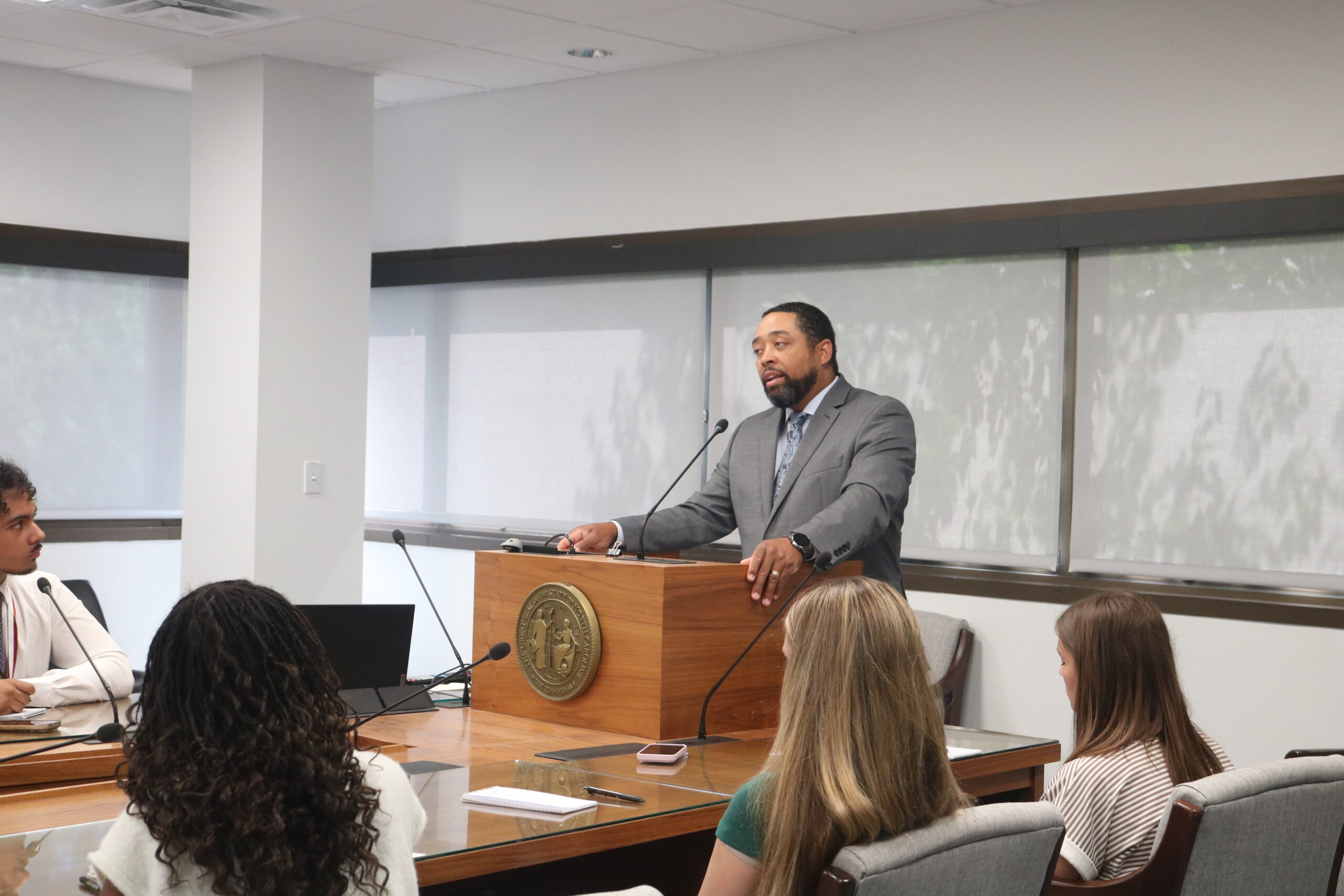
Small farmers throughout North Carolina are struggling to stay afloat, facing financial troubles, property loss and competition with large-scale supply chain farms. But Rep. Ray Jeffers (D-District 2) is proposing legislation he said will ensure security and stability.
Jeffers, who’s also a local farmer, has proposed House Bill 617, providing funding to support North Carolina’s small farmers.
“Our small farmers are definitely in need. I think we have a legislature here that is very friendly to the farming and farming industry,” Jeffers said.
Jeffers’ proposed bill would allocate $20 million in funding to small farmers who have a gross income of $300,000 or less via support such as grants, tax relief and machinery.
The bill is divided into four main parts.
- $12 million would go toward a “Small Farmers Support Grant Program,” which would give farmers funding to buy equipment.
- $3 million would be used to provide “new or additional cold storage equipment,” helping those who are unable to quickly transport crops and meats to their next destination.
- $4 million would be put toward the Carolina Farm Steward Association to enact a FarmsSHARE program where North Carolinians can receive organic and locally grown food.
- $1 million would be allotted for loans to eligible farmers who are a part of the Environmental Quality Incentives Program, a program that pays North Carolina farmers to practice eco-friendly production.
The bill is meant to help farmers invest in equipment, infrastructure, livestock fencing, food processing equipment, and other improvements that can make their operation more productive and profitable.
Audrey Thompson, a farmer from T-5 Farms in Alamance County said, “It can be really beneficial to get the money that we need to be able to continue to grow and stay doing what we’re doing.”
Jeffers said he met with farmers who told him they were excited about the bill because they understand firsthand the struggles North Carolina farmers are actively dealing with.
Most people rely on grocery stores or chain brands for food instead of supporting local farmers because of the increased cost associated with small scale producers.. He said his bill would give small local farmers the support and funding to make their goods more accessible to the public with lower prices.
“They have really embraced local food, farm-to-table and understanding where our food is coming from,” Jeffers said.
He said in times of instability in the food market, North Carolina has shown support for local farms.
“They can remember back during COVID when shelves were bare, but we could go down the street to our local farmer who may be growing produce and so forth and be able to access food,” Jeffers said.
Local support is important for small farmers to be able to keep farming without worrying about making ends meat.
“We’re really grateful for the customers that we have and what they do for us,” Thompson said.
Additionally, Thompson and T-5 Farms sell to local restaurants. “We like to support locally the same that we like to be supported,” she said.
Not only does supporting local farms help influence economic growth, Thompson said fresh produce has higher nutritional values, meaning that buying from local farms is beneficial to consumers.
At Pandora’s Pies, Maria Lester said the business sources all produce from local produce vendors from the Elon’s Farmers Market. Additionally, she said she feels the benefits in the quality and the support of other local businesses.
“We all like to eat. We all like to wear clothes and we all like to fuel our cars,” Jeffers said. “I think we need to be mindful of where our food comes from and make sure that we’re supporting those that are taking the risk.”
Jeffers said that the bill is still awaiting approval from the Agriculture and Environment Committee, Appropriations Committee and the Finance Committee.

Aly McFadden
Alesandra McFadden is a rising senior at Arthur L. Johnson High School in Clark, New Jersey. A passionate writer and creator, Aly serves as editor-in-chief of her school’s newspaper, overseeing all articles published in local papers. Additionally, she is the sole editor for the New Jersey Key Club, where she manages all editorial and publication efforts at the state level. Aly has a strong passion for service, having completed over 300 service hours throughout her high school career. Her commitment to service extends beyond school, as well. She served as Miss American Irish with the Woodbridge American Irish Association, where she demonstrated leadership and inspired members of her community. Aly is also an avid runner and a three-year varsity athlete on her school’s cross country team. This year, she elevated her leadership by serving as a junior captain, supporting and motivating her teammates throughout the season. In recognition of her dedication both on and off the course, she received the Best Teammate Award. Aly is excited to continue her journey in communications through the Emerging Journalists Program.

Claire Watrous
Claire Watrous is a rising senior at Bloomington High School North in Bloomington, Indiana. She has dedicated her high school career to both school spirit and student media. For the upcoming academic year, she will serve as the editor-in-chief of both the yearbook and the newspaper. Her most significant contribution to the school’s journalism department was spearheading the effort to reinstate the newspaper class, which she initiated to ensure student voices have a permanent platform. Beyond the newsroom, she is a four-year member of the Bloomington North cheerleading team, where she has developed the teamwork and discipline she brings to her leadership roles. Her commitment to her school community extends into her involvement as a member of the Student Council, National Honor Society and her school’s freshman mentor program, where she helps incoming students transition into high school life. She plans to pursue journalism in college.

Olivia Nelson
Olivia Nelson is a rising senior at Heathwood Hall Episcopal School in Columbia, South Carolina. For the past three years, she’s worked diligently on The Highlander, Heathwood’s yearbook, and will be stepping into the role as editor this upcoming school year. Aside from her yearbook responsibilities, Olivia has represented her class on Heathwood’s class council and serves as a PEAK (Pursuit for Environmental Adventure and Knowledge) Student Leader, assisting with ropes courses and pond activities. She is also an active participant in Heathwood’s Youth In Government delegation, showcasing her talents as both an appeals attorney and legislator, and is now soon to be a clerk. Outside school, Olivia is a public servant to her community and has over 200 hours of community service with Meals On Wheels, Harvest Hope, Power In Changing and more. Most recently, she co-founded Loads of Love to help address the need for laundry supplies for the homeless in Columbia. In March 2025, Olivia embarked on a trip to Kenya for a community engagement project with her school, where she helped repair a primary school and donated to the Voi community. She is also an active member of the Columbia chapter of Jack and Jill, where she has served as secretary and now as legislative chair. Aside from her extracurricular activities, Olivia enjoys traveling to new places, both in and outside the country, and has visited four of the seven continents. Fashion has always been a huge passion of Olivia’s, as she loves curating and shopping for unique pieces to add to her wardrobe.