

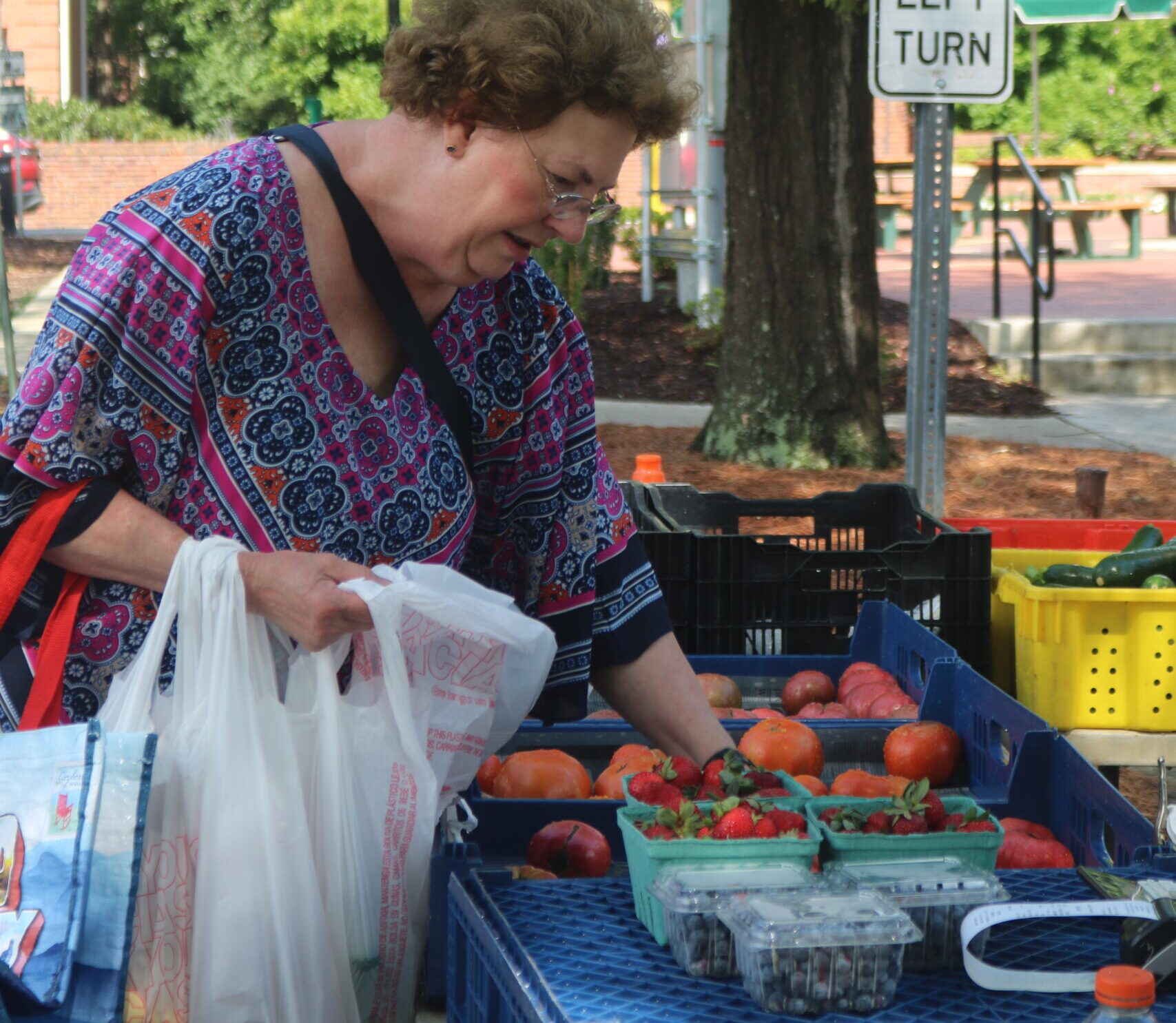
North Carolina is a state built by tobacco and fed by the 8.1 million acres of in-state farmland, but agriculture is more an industry facing an uncertain future.
The future of local agriculture is endangered from rising costs, months without substantial rain and high temperatures. According to the North Carolina State Climate Office, the state is experiencing the “worst statewide drought in more than 18 years.” These conditions have the potential to cripple the coming growth seasons, and according to local farm owner and fisherman George Smith those who will likely bear the brunt are North Carolina’s small farmers.
“The problem is we’re not going to have anything to feed our animals next fall and next winter, and that’s really, really scary,” Smith said.
Market farmers shared their alarm for the unsustainable environment that has come to define agriculture. In the face of these challenges, Smith said there will be no future for the industry if something does not change.
“Production costs are going to have to come down,” Smith said.
To offset shrinking profit margins, many farmers have shifted away from wholesale distribution and moved toward direct-to-consumer sales through local farmers markets. According to local vendors, these alternative markets are feeling the strain. The Elon Farmers Market is one of the many seeing the trickle down from these rising costs and industry dependence on federal subsidies. According to Smith, farmers have had no choice but to raise prices.
“Everything’s had to go up in the last five years,” Smith said. “Pretty much everything’s up at least double what it was.”
Despite rising prices and the transition to small market sales, a need to produce and sell at a deficit has continued to create uncertainty for the future of agriculture, Smith explained. In face of debilitating droughts and production prices, small farms that are unable to compete in the market with their industrial counterparts look to federal support.
The United States Department of Agriculture works to aid local farms through subsidies and loans supporting agriculture and providing relief to disasters such as extended droughts.
“Many farmers without USDA subsidies couldn’t even stay in business,” Smith said.
Audrey Thompson, daughter of a local farmer, sees not only a rise in cost but a drop in profit while working at her family’s stand.
“We’re having to raise our prices, which in turn can lower the amount that we’re able to sell,” Thompson said.
Thompson said her family raises prices only when necessary, understanding that higher prices can and will affect both new and returning customers.
“There’s some people obviously still that will refuse to buy things if they think it is too far out of their price range, and I can understand,” Thompson said.
During dry seasons some farms like T5 -Farms owned by the Thompson family turn to well water and drip irrigation while others who do not have such systems look to minimize inevitable damage.
Thompson said the lack of rainfall still creates significant challenges. The farm must devote additional labor to watering crops and livestock, while issues such as deer damage and deteriorating soil quality continue to pile on additional cost.
“Our cows’ pasture dries up, so we’re having to feed more hay, which is an extra cost,” Thompson said.
Thompson said that dry conditions could affect soil health and delay future planting schedules.
Small farmers have accepted the drought’s effects will be lasting and extend beyond the current growth season, Thompson and Smith said.
“It’s impacting our fall season already, even if we start to get rain, because we’ve gotten behind on getting plants in the ground,” Thompson said.
Beyond the financial cost of production, many customers do not realize how much time, labor and resources are invested into the growing season.
Parker Vaughn, a first-time flower seller, said she hand picks and seeds all flowers from her family’s garden. Vaughn said that during the growing season all her flowers take about eight months to be market ready.
“Just shop locally, and you should really try and understand how hard people work on the businesses that they have, especially at farmers markets,” Vaughn said.
In the face of industry challenges that have threatened more than individual production, farmers believe that the relationship between farm-to-table is now more important than ever.

Amirah Williams
Amirah Williams is a rising senior in the Middle Creek High School Adobe Digital Media Academy, in Apex, North Carolina. She is deeply committed to inclusivity and visibility in the communication industry. She is the founder and president of the Middle Creek Black Student Union, as well as the founder of her school’s food pantry. She is the outreach officer for her academy, as well as the outreach officer for her local chapter of SkillsUSA, where she has competed at the state and national conference in video news production as a news anchor, placing fourth nationally. She competed this year for a student Emmy, writing a report and filming and editing a package on Anne Holt and inclusivity in industry. She has displayed her passion for communications through her work with The Durham Bulls broadcast team, WRAL and the North Carolina Coastal Pines Girls Scout council’s marketing office. She enjoys nature and hanging out with her friends, often hiking and paddleboarding.

Bao Nguyen
Bao Nguyen is from Sacramento, California, and is a rising senior at Christian Brothers High School. He is actively involved in choir, cross country, French Club, and being a school ambassador and retreat leader. With all these activities in and outside school, he strives to spread positivity within his community. When he’s not on campus, he enjoys spending time with friends, going to the beach, volunteering, traveling and cooking. He recently came back from an immersion program in Los Angeles, learning about the history of skid row, along with bonding with his fellow classmates, peers and the LA community. During his junior year, his passion toward social justice and journalism sparked, leading him to spread awareness and take a new perspective toward life. He hopes to pursue a career in whatever comes next, with the goal of helping others and making a positive impact.

Laszlo Dworkin
Laszlo Dworkin is a rising senior at Chaminade College Preparatory in Los Angeles. He thoroughly enjoys writing and engaging in deep conversation with peers on current world developments. He is immersed in Chaminade’s film program, entering the school’s highest level, Film 7, next year. He’s also the director of on-air talent for his school’s sports broadcasting program, where he offers color commentary on high school football games during the fall semester. He is obsessed with discussing everything sports, playing varsity tennis for Chaminade and being an avid NFL fan. Laszlo likes to hang out with friends on weekends and loves to sleep in whenever possible. Inclusivity stands at the forefront of his beliefs, as he strives to make outstanding impressions on everyone he meets.